
| Kingdom : | Animalia |
| Phylum : | Chordata |
| Class: | Mammalia |
| Order : | Carnivora |
| Family : | Felidae |
| Genus : | Panthera |
| Species: | P. pardus |
| Zoological name : | Panthera pardus |
| Found In : | Corbett National Park, Kaziranga National Park and Sariska Tiger Reserve |
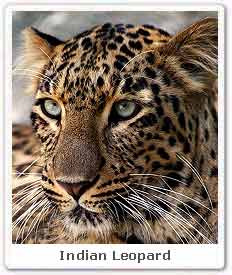 Physical appearance : Their head is larger than their
body. Male weigh around 91 kg and the females weigh around 60 kg. It has
long dark tail measuring 3 feet. Males are usually larger than the females.
The leopard's coat has a background color of pale, cream-yellow on its
underside that darkens slightly to an orange-brown on its back. It has short
eyes and broad paws. They have dark spots on their face, head, throat,
chest, and legs. The rest of their body is covered in "rosettes".
Physical appearance : Their head is larger than their
body. Male weigh around 91 kg and the females weigh around 60 kg. It has
long dark tail measuring 3 feet. Males are usually larger than the females.
The leopard's coat has a background color of pale, cream-yellow on its
underside that darkens slightly to an orange-brown on its back. It has short
eyes and broad paws. They have dark spots on their face, head, throat,
chest, and legs. The rest of their body is covered in "rosettes". Presence in India : Indian Leopards are easily spotted in the Corbett National Park, Kaziranga National Park and Sariska Wildlife Sanctuary.
Habitat : Indian Leopards prefer dry deciduous forests, desert ecosystems, tropical rainforests and northern coniferous forests.
Diet : Indian Leopards are carnivorous. They feed on monkeys, rodents, reptiles, amphibians, birds, fish, wild pigs, wild boars and many more.
Reproduction :Indian Leopards mate through out the year. Females give birth to two cubs per litter. Cubs are weaned at about 4 months of age. New born open up their eyes between eight to tenth day of the birth.
Conservation status : Critically endangered
Lifespan : Indian Leopards live u to the 21 -23 years of age.