

| Kingdom : | Plantae |
| Division | Magnoliophyta |
| Class: | Magnoliopsida |
| Order : | Lamiales |
| Family : | Bignoniaceae |
| Genus : | Millingtonia |
| Species : | M. hortensis |
| Scientific Name : | Millingtonia Hortensis |
| Found In : | Sultanpur Bird Sanctuary |
Other names : Akas Nim, Nim Chameli, Betati Nim, Mini Chameli, Karkku, Kat Malli, Kavudi are some of the other names used for the Cork Tree.
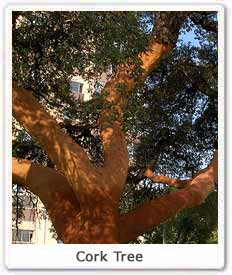
Description : It is a tall deciduous tree. It grows up to 25 meter. The leaves are pinnately compound. Flowers in corymbose, long tubular, white and fragrant. The fruit is a capsule. It flowers at night and shed flowers early in the morning. It has corky bark. It has straight trunk and has few branches.
Other Species : Phellodendron amurense, Phellodendron chinense, Phellodendron japonicum, Phellodendrum lavallei, Phellodendron sachalinense, Phellodendron wilsonii are the other related species of the Cork tree.
Location : Cork tree widely grows in the Central India. It is mostly found in the tropical forests. It can be found in the Sultanpur National Park in India.
Cultivation methods : Cork tree can grow in variety of soils. It requires full sunlight for its growth.
Medicinal uses : Stem and roots of the Cork tree have great medicinal value. Its dried flower is a good lung tonic. It is also used in the cough diseases.
Other uses : Its flowers are used in the rituals. Its bark is used to produce yellow dye.